Your 15-Second Short Isn't the Problem. Stop Cutting.
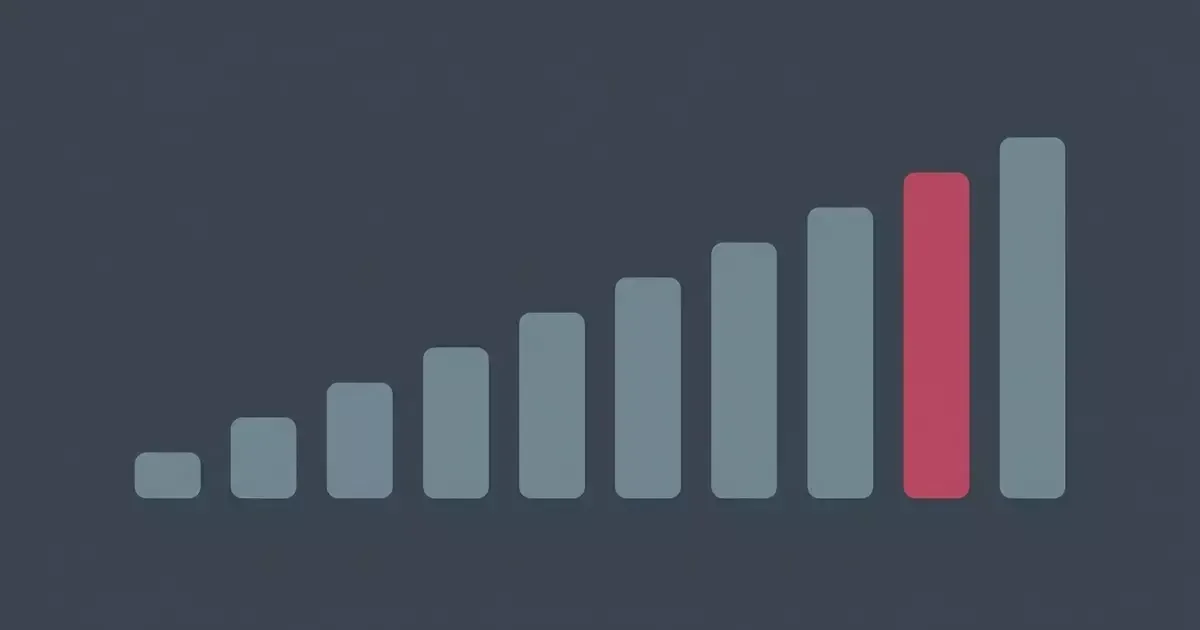
TL;DR: There is no single correct length for a faceless YouTube Short. The data in this post covers 756,851 videos exported from one AI video tool and reports no views or retention. Only 4.4% ran 15 seconds or under, so 15 seconds is no norm to trim a story to. Let the story set the length, then check your retention.
If you have been cutting your faceless videos down to fifteen seconds because that is what short-form is supposed to be, you can probably stop.
In a dataset of 756,851 AI-generated videos, clips under 15 seconds were 4.4% of output. The single largest bucket was 90 seconds and over, at 35.7%. The average exported video ran 115.5 seconds — just under two minutes, on tooling built for TikTok and Reels.
That is not permission to ramble. But if you have been trimming a story that needed a minute into a clip that needed to be fifteen seconds, the format was never the reason it underperformed.
What The Data Actually Says
The numbers come from revid.ai's analysis of its own platform(opens in new tab), covering activity up to and including 2025. The duration split:
| Duration | Share of videos |
|---|---|
0-15 seconds | 4.4% |
16-30 seconds | 11.9% |
31-60 seconds | 31.1% |
61-90 seconds | 16.9% |
90+ seconds | 35.7% |
Two-thirds of everything exported sits in the 31-60 and 90+ buckets. The sub-30-second range that most people picture when they hear "short-form video" is 16.3% of the total.
A few other figures from the same set, which matter later: 86.6% of videos ship with captions, 77.9% are 9:16 vertical, and the average script runs 117.5 words.
The Caveat That Changes How You Should Read This
Most write-ups of this dataset will skip the next paragraph.
It measures what creators made, not what audiences rewarded. Every one of those 756,851 videos is a file someone exported from one AI video tool. The dataset contains no view counts, no retention curves, no revenue. It cannot tell you that 90-second videos perform better, because performance is not in it.
What it is genuinely good evidence for: the production norm has moved. When a third of everything exported from a short-form tool runs past 90 seconds, "short-form means 15 seconds" is a description of 2021, not of what people are currently making. That is a real and useful finding. It is just a different finding than "make longer videos and you will grow."
There is a selection effect on top of that, and the study says so itself: the report notes it "may not be representative of all short-form video content published across TikTok, Instagram Reels, or YouTube Shorts." These are videos made on one platform, by people who chose that platform, using its defaults. Defaults shape output. If the tool makes 90-second story videos easy, its users will export a lot of 90-second story videos, and the number tells you as much about the product as about the market.
Read it as a census, not a leaderboard.
Why This Still Matters For Faceless Channels
Even with that caveat, the census is useful, because the thing most faceless operators optimize is the wrong variable.
Cutting for length breaks the payoff. A faceless video is usually a story or an explanation. Both have a shape: setup, tension, resolution. Compressing that into fifteen seconds does not make it tighter, it makes it incomplete. The viewer gets the setup and the beginning of the tension and then it stops. Whether that registers anywhere in YouTube's systems is not something this dataset can tell you, and not something YouTube has spelled out, though its public language about unsatisfying content seems aimed at roughly this territory. What you can say without the caveat is simpler: a story that stops before its ending is a worse video.
Duration is a symptom, not a lever. If a 40-second video is not working, the honest question is whether the first three seconds earn the next thirty, not whether it should have been 25 seconds. Length is the easiest thing to change and almost never the thing that was wrong.
Longer runtime is a bigger surface for slop. This is the argument against the naive reading. If your 20-second video was thin, the 90-second version is thin for longer. Extending only helps when there is more story to tell, and a lot of faceless output does not have more story — it has more filler.
The average script in that dataset is 117.5 words. At normal narration speed that is somewhere around 50 to 75 seconds of speech, against an average export of 115.5 seconds. On a typical video, something like half the runtime is not narration. Whatever fills that gap (visual beats, pauses, b-roll, an ending that breathes) is doing real work, and it is a more interesting question than the total duration. What has to happen inside the first few seconds of it is a separate craft problem, and we covered it in hook patterns that score 80+.
What To Do With Your Own Numbers
The dataset cannot tell you what works on your channel. Your own analytics can, and the comparison takes about ten minutes.
- Pull your last 20 uploads and note duration and average view duration for each.
- Compute retention as a percentage, not seconds watched. A 90-second video held for 45 seconds and a 20-second video held for 12 look similar in raw seconds-per-view terms, but they are 50% and 60% retention. The percentage is the comparable number.
- Look for the cliff. Most channels have a duration past which retention falls off sharply. That number is yours, and it is more useful than any industry average.
- Check whether your short videos are short by design or by habit. If you cut a 50-second story to 20 seconds, watch the 20-second version and ask whether the ending still lands.
If your retention holds flat across durations, length is not your constraint and you can stop thinking about it. If it collapses after 30 seconds, the problem is more likely the middle of your videos than their length — which is a format and consistency problem, not a runtime one.
FAQ
How long should a faceless YouTube Short be?
There is no single correct length, and the data does not supply one. What it does show is that the sub-15-second clip is now a small minority of output (4.4% in one 756,851-video dataset), so there is no reason to cut a story to fit that template. Let the story set the duration, then check your own retention.
Do longer Shorts perform better?
Unknown from this dataset — it records what creators exported, not how those videos performed. It contains no view or retention data. Anyone citing these numbers as proof that longer videos perform better is reading something into them that is not there.
What is the average length of an AI-generated short video?
Across the 756,851 videos in revid.ai's dataset, the average exported video ran 115.5 seconds and the average script was 117.5 words. Note this reflects one platform's users and defaults, not the whole market.
Should I still use captions?
The data is one-sided here: 86.6% of videos ship with captions. Silent viewing is the default assumption, and for a faceless channel where narration carries the content, captions are doing double duty.
Is 15 seconds ever right?
Yes, for content whose whole payload fits: a single visual gag, one statistic, a teaser pointing somewhere else. The mistake is not making short videos, it is amputating longer ones.
Where To Start Tonight
Open your analytics, sort your last 20 uploads by average view percentage, and look at the top five. If they are all one length, you have found something. If they are spread across durations, length was never your variable, and you have just saved yourself a month of editing decisions that would not have mattered.
We built ViralFaceless(opens in new tab) for people who would rather check their own numbers than inherit someone else's template. Start free(opens in new tab) if that sounds right.
Length was not your variable. Something else is.
Once you have ruled out the rule everyone repeats, what is left is whether your uploads read as one channel. ViralFaceless saves a channel's default image style, voice and caption mode, so those settings stay put while you test the others.
About the Author

Founder at Dimantika
Co-founder of Dimantika. Builds Clipwright and ViralFaceless with coding agents. Previously ran GlockSoft with a partner for about 15 years. Writes about products and finding customers.
View all postsMore articles you might like.

YouTube Video A/B Testing: Hooks Are Cheap. Winners Aren't.
YouTube video A/B testing reaches select creators in 2027. Three hooks are easy to make for a faceless channel. A verdict you can trust is the hard part.

The AI Video Factory: Where It Actually Breaks
The auto-everything AI video factory is real, and parts of it genuinely work. But four things break the moment you run it at scale — and none of them are the render.

YouTube Shorts SEO: What Actually Moves the Feed
A creator spent months on tags and keywords and stayed at 200 views. Here's what actually drives Shorts discovery in 2026 — and the small job tags still do.