Why Faceless Channels Plateau — and What Breaks It
TL;DR: Faceless channels often plateau because viewers watch one video, get what they came for and have no reason to remember the channel. This post calls that a memory problem. Interchangeable content can win the first view and lose the second. A consistent look, voice and point of view gives viewers a reason to come back.
"I've just hit 1,000 subscribers and all my videos are at 20k–30k views. The moment they hit 30k they kinda just die off." That's a faceless creator on r/NewTubers(opens in new tab), describing the wall almost every faceless channel hits.
You've probably felt the early version of it. The first few videos pop, the graph looks like a rocket, and then it flattens. Views hold but subscribers don't follow. Each upload does about as well as the last, or a little worse.
The instinct is to blame reach: the algorithm, the niche, the upload time. Usually it's none of those. The plateau is a memory problem, not a reach problem. Here's what that means and how to break it.
The tell: high views, flat subscribers
The clearest symptom shows up as a gap between views and subscribers. One creator described it exactly: "120k views on your video and only 3k subs? That tells you no one is planning on coming back. Many people watch one video, get the information, and leave."
That's the whole diagnosis. Views measure whether a video got distributed. Subscribers measure whether anyone wanted more of you specifically. When views are healthy but subs are flat, the algorithm is doing its job and your channel isn't. People are showing up, getting what they came for, and feeling no reason to remember you.
A channel that nobody comes back to can't compound. Every video starts from zero instead of building on the last. That's the ceiling.
Why generic faceless content plateaus on schedule
Generic content has a built-in expiration date. As one creator observed, "a lot of AI channels suffer from repetitive content and see their views drop after the novelty is gone."(opens in new tab) The first videos ride curiosity. Once that's spent, there's nothing underneath.
The deeper issue is sameness. Faceless channels increasingly look identical: stock footage or basic AI visuals, a synthetic voice, a slow zoom. One creator described stumbling on three different channels that were effectively the same: "all 2 weeks old, post daily about dogs, AI voice, AI scripts, AI images slowly zoom in and out." When your channel is interchangeable with a dozen others, a viewer has no reason to attach to yours.
Another creator named the mechanism: "if every upload feels like the same template with different nouns swapped in, people might watch once out of curiosity, but they usually don't come back unless the channel has some real point of view." Templated content buys the first view and forfeits the second.
YouTube renamed its "repetitious content" policy to "inauthentic content" in July 2025(opens in new tab), and said that kind of content "has always been ineligible" for monetization. A July 2026 clarification(opens in new tab) broke the policy into three named categories, and the first is generic, repetitive, template-based video with little variation between uploads, which is what generic sameness looks like from the review side. We cover the policy in full elsewhere.
Style is the cheapest retention lever you're not pulling
Here's the part most plateau advice misses. The fix isn't a higher-paying niche or a posting-frequency change. It's making your channel recognizable, so a viewer who liked one video can spot the next one in a crowded feed and think "oh, this channel."
A widely-shared creator observation this year put it in blunt terms: stock-footage and basic-AI-visual channels tend to plateau low, while channels with a consistent, cinematic style report meaningfully higher earnings, because viewers come back, watch longer, and trust the channel enough to buy. Treat that as one creator's experience rather than gospel, but the direction matches everything above: a distinct look lifts retention, and retention is the lever the whole system turns on.
Shopify's rundown of the algorithm puts a number on it: "According to Google, 90% of the best-performing videos have custom-designed thumbnails."(opens in new tab) The same guide tells channels to keep a consistent format across thumbnails and videos, so a viewer who liked one expects to like the rest.
The causal chain is short and it's worth saying plainly:
- A recognizable visual style makes viewers stay longer (better retention).
- Better retention earns more distribution and, on the same views, a better RPM.
- Viewers who recognize you come back, which is the only way a channel compounds.
- A loyal audience is the only one you can eventually sell anything to.
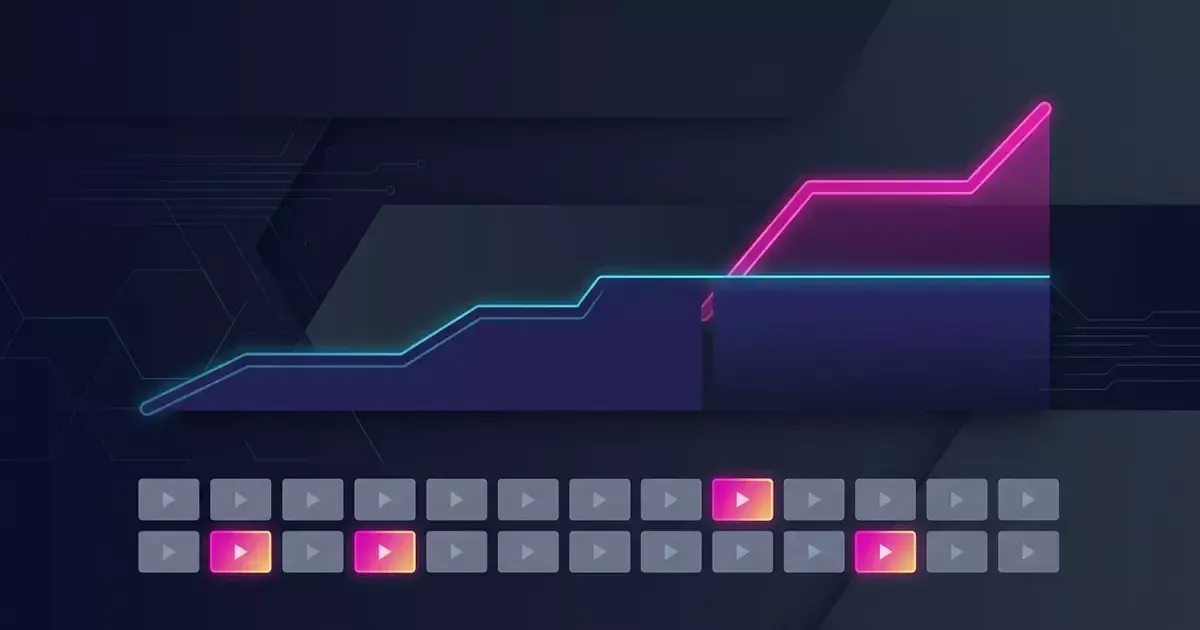
Illustration, not measured data: two channels can pull the same views, and only one builds an audience that comes back.
What "visual style" actually means for a faceless channel
It's not about being fancier. It's about being consistent and intentional enough that your videos are unmistakably yours. A few concrete levers:
- A fixed palette and type treatment across thumbnails and on-screen text, so the channel reads as one brand.
- A consistent visual language: the same kind of footage, the same motion, the same framing, instead of whatever the generator produced that day.
- A voice you keep: same narrator (human or a deliberately chosen, non-robotic AI voice), same tone, every video.
- A recurring structural signature: how you open, how you pay off the hook, so returning viewers feel at home.
What follows is the concrete version of that consistency, and why templated looks decay on their own even on a tight schedule is covered in the slop tax. The point here is the why: consistency is what converts a one-time viewer into a subscriber, and subscribers are what break the plateau.
Keeping that consistency across dozens of videos by hand is the hard part. It's exactly why we built ViralFaceless(opens in new tab), so you choose the script, voice and visuals for every video instead of rebuilding the pipeline from scratch.
Write the look down as a spec
Four things make a channel recognizable: palette, lighting, composition, motion. Pick two colors and one accent as exact hex values, not names like "blue and white." Write the whole look as one prompt-ready line. "Deep navy #1A1A2E background, warm parchment foreground, golden-hour side light, rule of thirds, slow dissolve transitions" is a spec. "Warm and cinematic" isn't.
Test it before you trust it. Generate five scenes from that exact spec. If the palette and lighting hold across all five without you adjusting anything by hand, the spec works. If it drifts, tighten the language and try again.
Stock footage can't do this. The same clips sit in hundreds of other videos, so there's no fingerprint tying them to your channel, however well you color-grade it.
The plateau is a signal, not a dead end
When your views flatten and subs stall, the channel is telling you something specific: people are finding you and forgetting you. That's fixable, and it's cheaper to fix than to out-post. You don't need more videos. You need the videos you already make to feel like they came from the same place. (If retention is the symptom, our guide to Shorts scripts that hook in 3 seconds is the next thing to read.)
FAQ
Why is my faceless channel stuck at the same view count?
Usually because the content is interchangeable with other channels, so viewers watch once and don't return. Views measure distribution; flat subscribers reveal that nobody wants more of you specifically. Building a recognizable identity is what restarts growth.
Why do I get views but no subscribers?
A high-views, low-subscribers gap means people get what they came for and leave. They have no reason to expect a distinct experience from your next video. A consistent voice, look, and point of view give them that reason.
Does visual style really affect YouTube revenue?
Indirectly but strongly. A recognizable style lifts retention; retention drives both distribution and RPM, and it builds the returning audience you can eventually monetize beyond ads. Generic content caps all three.
Can I use stock footage if I color-grade it to match my palette?
Color grading shifts the dominant hues, but the framing, lighting direction and depth of the original footage stay whatever that shoot decided, and won't match your composition and lighting rules. AI-generated visuals built from your spec don't have that mismatch, because the structure is generated to spec instead of corrected afterward.
Does visual consistency matter more for Shorts than for long-form video?
A Short gets swiped past before anyone has time to read a title, so motion pattern and color temperature are what register. Without a consistent look there, the hook text is carrying the whole video by itself.
How do I make a faceless channel recognizable?
Lock a consistent palette, footage style, voice, and structural signature so every upload feels like the same channel. The goal is that a viewer who liked one video can spot your next one in the feed without reading the channel name.
Pull up your last 10 videos as thumbnails in a grid. If you can't tell at a glance that they're from the same channel, that's your plateau. Pick one element (palette, voice, or opening) and make it identical across your next five uploads.
ViralFaceless exists to make that kind of consistency effortless across a whole channel. Start free(opens in new tab): 60 credits on signup. They are not renewed.
Most faceless channels die in weeks one to three.
Not from bad ideas — from having no repeatable way to ship the next episode. ViralFaceless is that workflow.
About the Author

Founder at Dimantika
Co-founder of Dimantika. Builds Clipwright and ViralFaceless with coding agents. Previously ran GlockSoft with a partner for about 15 years. Writes about products and finding customers.
View all postsMore articles you might like.
7 Ways to Grow a Faceless Channel Without Filming
vidIQ pulled 400,000 views from community posts in 28 days without filming anything. Here are 7 free levers in YouTube Studio that grow a faceless channel from content you already made.
Watch Time Is Not the Goal: What YouTube Actually Rewards
YouTube rewards viewer satisfaction over raw watch time. Why that breaks the hands-off faceless model, and what to optimize instead.

YouTube Video A/B Testing: Hooks Are Cheap. Winners Aren't.
YouTube video A/B testing reaches select creators in 2027. Three hooks are easy to make for a faceless channel. A verdict you can trust is the hard part.