Faceless Was the Whole Point. Google Just Made It Optional.
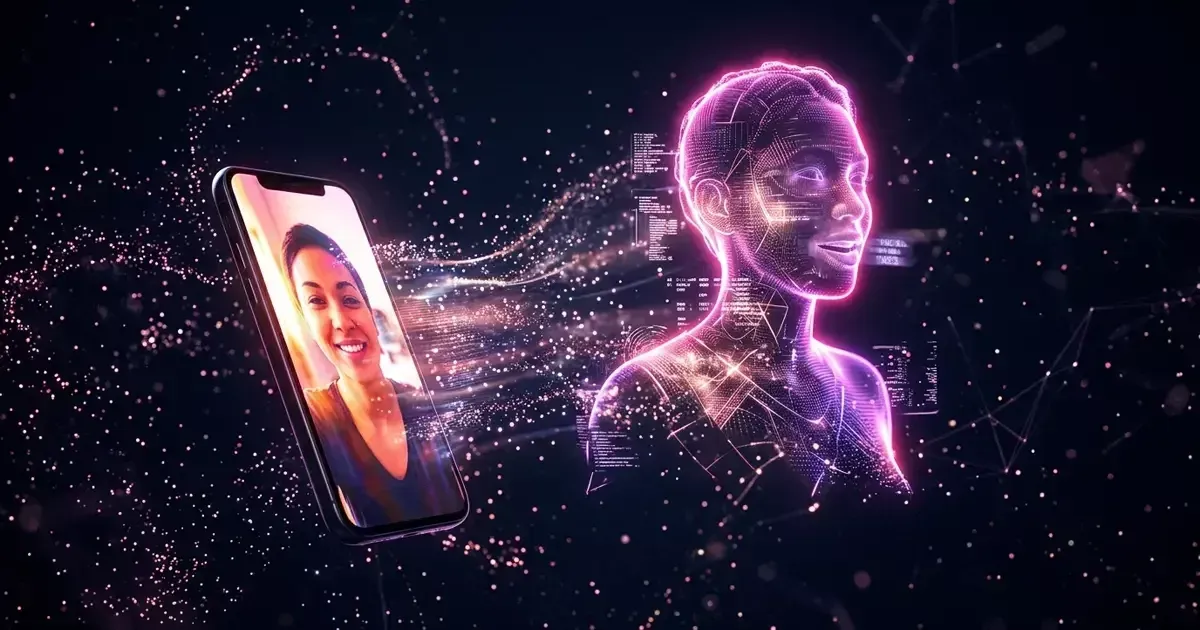
You built a faceless channel on purpose. No camera, no face on screen, none of you in the frame at all, that was the entire appeal. On July 16, Google shipped a feature that quietly undercuts the premise: upload one selfie and a short voice clip, and Google Vids builds a talking digital version of you that reads any script you type (blog.google(opens in new tab)).
So now "faceless" is a choice, not a constraint. And that lands at an awkward moment, because YouTube's algorithm has spent the last year quietly rewarding channels that show a face.
Here's what the avatar update actually changes for a faceless operator, and what it doesn't.
What Google actually shipped
Two things went live in Google Vids on July 16: Gemini Omni, a model that generates and edits clips from plain-language prompts, and personal avatars (blog.google(opens in new tab)).
The avatar is the part that matters here. You record your face and voice once, and Vids produces a digital double that delivers whatever script you give it, no camera setup, no re-shoots (Google support(opens in new tab)). It's tied to your Google account, locked to your own likeness, watermarked with SynthID, and gated to users 18 and over in supported regions (TechCrunch(opens in new tab)).
YouTube has been building the same capability into its own Create app in parallel: a live selfie capture that makes an avatar for Shorts, capped around 8 seconds and labeled AI-generated (DailyTopAI(opens in new tab)). The direction is unmistakable. A face on screen no longer requires a person in front of a camera.
Why this collides with the faceless squeeze
The timing isn't neutral, because a face is exactly what YouTube's enforcement started rewarding.
Over the past year, the algorithm shifted to favor videos with a real human face, and off-camera creators felt it directly. Craig Billings, who runs the science channel Doctor NOS to 1.7 million subscribers, said the faceless channels covering his territory kept coming to him for help: "The people who do the same content as me without their face in it, most of them are getting demonetized" (The Hollywood Reporter(opens in new tab)). We pulled that whole dynamic apart in the faceless squeeze: the enforcement target is templated slop, but the signal it leans on is whether a face shows up.
So creators started renting faces. Noah Morris, who runs six faceless channels, described operators hiring cheap on-camera hosts off Fiverr and Upwork to feed the algorithm the face it wants (Hollywood Reporter(opens in new tab)). A personal avatar is the logical next step in that arms race: instead of renting a stranger's face, you generate your own and never leave your desk.
The avatar is the third door. It gives the algorithm a face without a camera, but it hands your likeness to a platform and doesn't touch whether the content is original.
The trap: a face was never the real fix
Here's where creators are about to make the same mistake twice, and it's worth stopping on.
The face-preference signal is a proxy. YouTube can't cheaply measure "did a human with a perspective make this," so it reaches for something it can measure: is a face on screen? An avatar games that proxy perfectly. It shows a face. It just doesn't add the thing the face is standing in for.
A faceless finance channel that generates an avatar of its owner is still running the same templated scripts over the same stock footage. The avatar doesn't make the writing more original, the angle less generic, or the catalog less interchangeable. It passes the face check and fails everything the face check was a stand-in for. If YouTube's actual target is low-effort mass production, an avatar reading generated scripts is a way to keep producing slop with a friendlier thumbnail.
And the creators closest to this see it. As one breakdown of the YouTube avatar tool put it, recording yourself with a basic camera is already "easy and accurate" enough, so swapping in an AI clone "doesn't feel like a meaningful improvement, it feels like a step away from the real connection that makes YouTube powerful" (DailyTopAI(opens in new tab)). The avatar solves a production problem you might not have while leaving the distribution problem you definitely have untouched.
The real cost nobody prices in: your likeness
There's a second reason to slow down before you generate a double of yourself.
An avatar means handing a platform a high-fidelity capture of your face and voice. Google says the avatar is locked to your account and your likeness, and watermarked (TechCrunch(opens in new tab)), which is genuinely a more careful launch than most. But "locked today" is a policy, not a physical law, and policies change. For a creator whose whole reason for going faceless was privacy, trading anonymity for an algorithm nudge is a bigger deal than the feature framing admits. The questions worth sitting with are simple: would clips of "you" circulating after you delete the avatar bother you, and does your audience actually want a polished AI version of you over a real, imperfect one (DailyTopAI(opens in new tab))?
When the avatar actually earns its place
None of this makes avatars useless. It makes them a tool with a narrow fit, and the fit is worth naming honestly.
If you already show your face and the bottleneck is production, re-shoots, lighting, being camera-ready, an avatar of yourself is a real time-saver. Vizard documented exactly this: a creator who shows his face to satisfy the algorithm while the back end still runs like a faceless factory (Vizard(opens in new tab)). That hybrid is the honest use case, a face you're comfortable putting your name to, on top of a system that scales.
What doesn't work is treating the avatar as a demonetization shield. The thing that protects a channel is the same as it was before the update: an original angle per video, real variation between uploads, a point of view that recurs. That's the authored throughline a template can't fake, and it's why some faceless channels get views but never convert to subscribers while others compound. An avatar changes who's on screen. It doesn't change whether a person with a perspective made the video.
That production-versus-authorship split is the bottleneck ViralFaceless(opens in new tab) around, keeping a channel's voice and identity consistent and recognizably authored across dozens of videos, avatar or not. If holding an authored identity at scale is your real problem, start free(opens in new tab).
FAQ
Does a personal AI avatar protect my faceless channel from demonetization?
No. The avatar satisfies the face-preference signal, but that signal is a proxy for original human input, which the avatar doesn't add. A channel running templated scripts with an avatar on top is still exposed to the inauthentic-content rules. The durable protection is original angles, variation between uploads, and a consistent point of view, not a generated face.
How does the Google Vids personal avatar actually work?
You record your face and voice once, and Google Vids generates a digital double that delivers any script you type, no camera needed for future videos (Google support(opens in new tab)). It's tied to your Google account, restricted to your own likeness, and every clip carries a SynthID watermark (TechCrunch(opens in new tab)). Access is limited to users 18 and older in supported regions.
Should a privacy-focused faceless creator use an avatar?
Weigh it carefully. Creating an avatar means giving a platform a detailed capture of your face and voice, which cuts against the privacy that drew many creators to the faceless format in the first place. If anonymity was the point, an AI voiceover over B-roll keeps you off the record in a way an avatar does not.
Is an AI avatar the same as an AI persona YouTube demonetizes?
Not necessarily. YouTube demonetizes AI personas that present themselves as human experts on sensitive topics like health, finance, or law, which we cover in the AI persona rule. An avatar of yourself delivering your own original content is a different thing from a fabricated "expert" character giving advice.
What to do in the next 10 minutes
Before you generate an avatar, answer one question: is your bottleneck production or distribution? If you're already on camera and re-shoots are eating your time, the avatar is a genuine fix, go try it. But if your channel isn't growing, an avatar won't move that number, because the problem was never the missing face. Pull up your last five uploads and find the one that reads most like a template. Rebuild it around a single original point only you would make. That's the work the avatar can't do for you.
About the Author

Founder at Dimantika
Creator of ViralFaceless. He writes about AI video production, content automation, and practical tools for faceless creators.
View all postsRelated posts
More articles you might like.
Two Posts Sold You Automated Distribution. Neither Number Checks Out
One claim belongs to a product the post never names. The other sits under a paid-partnership label no API can see. Both sold hands-off distribution.

What a Month of Faceless Video Actually Costs
Sixty credits once, then a real per-video cost, against a channel that takes weeks to show impressions. Nobody in the threads does this subtraction, and it is the one that decides whether you can keep going.
The Number You Are Refreshing Exists in Exactly One Screen
Impressions and click-through rate are the numbers everyone stares at to decide whether a new channel is doomed. We tested it: the YouTube Analytics API does not expose either one.