Your Best Video With Your Fans Can Still Flop With Strangers. Here's the Test.
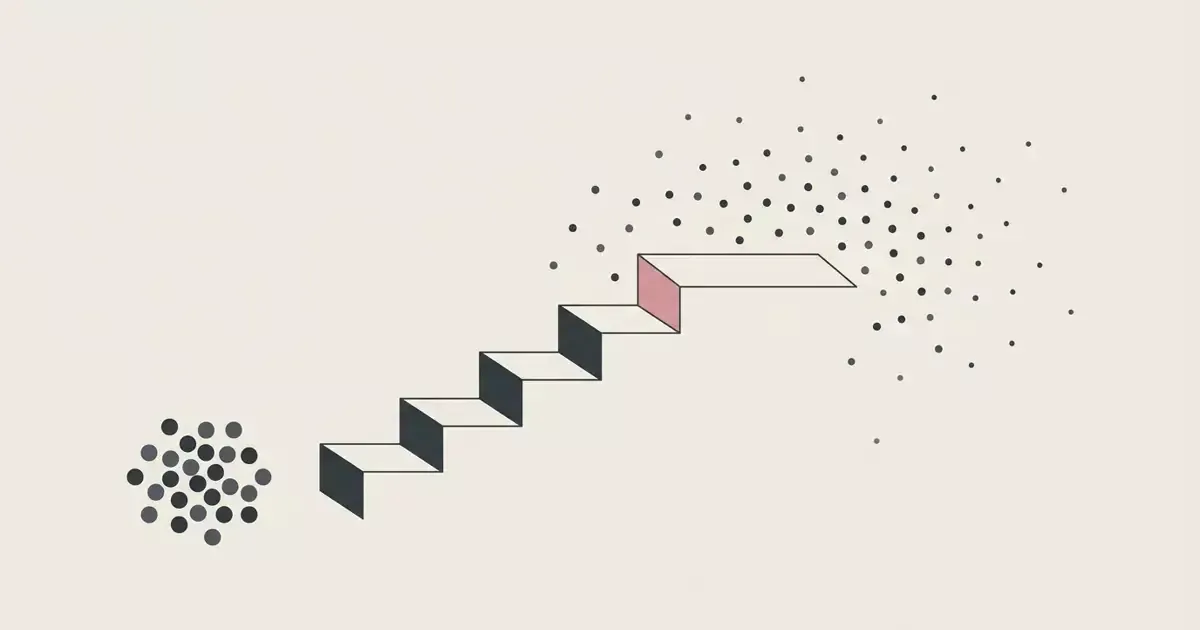
TL;DR: A video that reaches only people who already watch you may have done well with regulars and worse with strangers. YouTube does not publish how it expands reach. This post's working description: reach seems to grow one colder audience at a time and stalls when a new group responds worse. Check the video's new and returning viewers in YouTube Studio.
You post a Short. Your retention graph looks great. Your click-through rate is high. And the video still stalls out at a few hundred views.
Here's the confusing part, in a real creator's words: "retention and ctr are crazy high, engagement is crazy high… but youtube isn't pushing it? … why is it the video with the least amount of push from youtube but the best results? makes no sense to me." That's u/Fueledbyforeigns1 on r/NewTubers(opens in new tab), and it's the exact question this post answers.
The short version: your best numbers might only describe how your existing fans reacted. A stranger who's never seen your channel is a different test, and that's the test your reach actually depends on. Below is a way to run that test yourself, before you ever hit publish.
Why "why aren't my videos reaching new viewers" is the wrong quality question
Most advice treats reach as a quality score: make it good enough and the algorithm rewards you. That framing quietly misleads you, because "good" is measured against the wrong audience.
Think about how a video spreads. It goes out to a small group first, usually people already close to your channel. If that group reacts well, it gets handed to a slightly larger, slightly colder group. Then a colder one. Reach expands in steps, one new audience group at a time, and it keeps going only while each fresh group stays happy.
The way a former YouTube Partner Program manager described it in an interview: the system probably isn't asking "is this video good?" It seems to be asking "did the next group of people I showed this to react at least as well as the last group?" The moment a new group clicks less or drops off faster, expansion likely slows or stops. (YouTube doesn't publish its ranking internals, so treat this as an informed description of behavior, not a confirmed rule.)
Each new group is a fresh test. Great numbers with your fans don't carry over. The colder the group, the more your clarity has to work without any goodwill.
This reframes the whole "why aren't my videos reaching new viewers" question. It isn't "was my video good?" It's "did I keep a colder, less forgiving group engaged?" Your loyal audience can pass the first while your video fails the second.
High retention, low views: the loyal-audience mirage
Here's where good creators get fooled. Strong retention and CTR feel like proof of quality. Often they're proof of familiarity.
One creator laid the trap out perfectly. His most recent video had "a CTR of 35%" and roughly 75% retention, numbers most people would kill for. He wanted to know why YouTube wasn't pushing it. Then came the honest twist: the views "were mostly him + family." A near-perfect percentage on a tiny, warm sample tells you almost nothing about how a stranger reacts. That's u/arrlozz on r/NewTubers(opens in new tab), and it's the mirage in one thread: the metric was real, the audience behind it wasn't cold.
Another creator hit the same wall from the other side: "My first vid … has a CTR of 25.6% and has only had 515 impressions. (60.8% retention) So this is really good right? (Or no — is the low impressions telling me something?)" That's u/subtlefly(opens in new tab), and yes, the low impressions are telling him something. A great percentage on 515 impressions means a warm audience liked it. It hasn't been shown to enough strangers to know anything else.
So retention and CTR aren't lies. They just answer a different question than the one you're asking. Retention describes what happened after the algorithm found viewers for you. It doesn't decide who gets tested next, and it can't tell a warm crowd apart from a cold one on its own.
The one split that separates the two is already in your analytics: new versus returning viewers. In YouTube Studio, that's the subscribed-vs-not-subscribed and new-vs-returning cut on a specific video. A high CTR built almost entirely on returning viewers is a "loyal audience win." A high CTR that holds up among people who've never seen you is a "new audience win." Only the second one tends to earn more reach.
A video can win with the people who already know you and lose with everyone else. The aggregate number hides the gap; the new-vs-returning split reveals it.
What the cold group actually reacts to
If reach is gated one cold group at a time, the useful question becomes: what makes a colder group click less or drop off faster? For short-form, it's almost always a break in the promise.
A stranger scrolls onto your Short with zero context. In the first second or two they form a promise from your hook, your first frame, and your caption. Then they decide, fast, whether the video is delivering on it. When the payoff doesn't match the promise, or the promise was never clear, they leave. Multiply that across a cold group and the algorithm reads "this new audience reacted worse" and stops expanding.
You can feel this frustration in creators who sense the mismatch but can't name it. One put it bluntly: "I feel like that's what YouTube does, pitching my videos to people with awful attention spans." That's u/magniko_15 on r/NewTubers(opens in new tab). It's easy to read that as YouTube's fault. But it's usually the cold group doing exactly what a cold group does: giving you no benefit of the doubt. Your fans forgive a slow or fuzzy open because they trust you. A stranger doesn't, and a stranger is who the next expansion step is built from.
This is the part the crowded "high retention low views" advice keeps skipping. It tells you to fix tags, tweak the thumbnail, or wait it out. Those are post-mortems on a video that already stalled. The cheaper move is to check whether the Short reads clearly to a stranger before you post it.
The New Viewer Test: three questions before you post
Here's the habit. Before you publish a Short, look at your draft as if you were a stranger who's never seen your channel, and answer three questions honestly.
1. Does a stranger get the promise in the first two seconds?
Watch your opening with the sound off, then with it on. In the first two seconds, is it obvious what this video is about and why someone would keep watching? If you had to already know your channel to "get it," a cold viewer won't. Rewrite the hook until the promise lands with no prior context.
2. Does the payoff match the promise, fast?
Whatever the hook implied, does the video actually deliver it, and quickly? A common cold-audience killer is a hook that promises one thing and a body that wanders somewhere else, or takes fifteen seconds to arrive. Your fans wait. A stranger doesn't. If the payoff drifts from the promise, tighten one of them until they line up.
3. Would this make sense with your channel hidden?
Cover your channel name, avatar, and subscriber count in your head. Does the Short still work as a standalone piece? If it only makes sense as "episode 12 of a series you already follow," you've built it for returning viewers. That's fine for retention, but it caps how far a cold group will carry it.
Three questions, maybe two minutes. It won't tell you if a Short will go viral. It tells you something more useful: whether the Short even reads to a stranger, which is the bar it has to clear before reach can expand at all. Competitors will sell you a five-step recovery checklist for after the stall. This is the cheap check that prevents it.
FAQ
Why are my videos only reaching people who already watch me?
Your video probably passed the first, warmest test group but stalled at a colder one. Reach seems to expand one new audience group at a time, and it keeps going only while each fresh group reacts about as well as the last. If a colder group clicks less or drops off faster, expansion likely slows. Check the new-vs-returning viewer split on the video in YouTube Studio: if almost all the strong engagement is returning viewers, the algorithm may be reading a "loyal audience win" rather than a "new audience win."
Can a video have high retention and low views at the same time?
Yes, and it's common. High retention on a small number of impressions usually means a warm audience liked it: your fans, or friends and family. Retention describes what happened after viewers were found; it doesn't decide who gets tested next. A great percentage on a few hundred impressions hasn't been shown to enough strangers to tell you how cold viewers react.
Are subscribers a vanity metric?
Increasingly, they can be. A top reply on one r/NewTubers thread(opens in new tab) put it as "zombie subscribers … Active Audience is the bigger thing." The former Partner Program manager, per the interview, described the same idea from the inside: a subscriber counter isn't the valuable asset — the audience that actually returns and reacts is. It's the same shift, arriving from two independent directions.
The bottleneck isn't the test — it's making enough Shorts to run it on
Running the New Viewer Test on one Short is easy. Running it on enough Shorts to actually learn what reads cold — that's the hard part. You need volume: many drafts, many hooks, many attempts at a clear promise-and-payoff, so the test has something to catch.
That volume is the bottleneck ViralFaceless(opens in new tab) is built for. The test tells you if a Short reads cold; producing on-bar Shorts fast enough to keep testing is the part we're trying to make easier. If that's a problem you have, start free(opens in new tab): 60 credits on signup, no card. They are not renewed.
Two independent sources, one conclusion
None of this is a secret algorithm leak, and it shouldn't be sold as one. It's the same conclusion showing up from two different starting points.
We reached a version of it from analytics reasoning in an earlier post: the audience the algorithm assigned your faceless channel probably isn't the one you imagine. Now a former Partner Program manager, per an interview, describes the mechanism from inside the system and lands in the same place. Two very different vantage points, one conclusion: your reach is gated by how new viewers react, not by how good the video feels to you or your fans.
Treat that as convergent testimony, not proof. YouTube's own help docs(opens in new tab) put it plainly: to grow, creators "need to both retain their existing viewers and attract new ones." Even the platform frames growth as a new-viewer problem, not a pure-quality one.
So the next time a Short with great numbers stalls, resist the urge to panic-edit it in the first day. Instead, open the new-vs-returning split, and run the New Viewer Test on your next draft. If you want the deeper cut on why strong Shorts still don't convert strangers into subscribers, or why consistency matters more than any single video, those go one level further. The habit itself takes two minutes. Do it before you publish, not after you stall.
No growth advice is ever 100% right — how well it works depends on who applies it and how. But "would a stranger get this?" is a question worth asking every single time, because a stranger is exactly who your next thousand views are made of.
Most faceless channels die in weeks one to three.
Not from bad ideas — from having no repeatable way to ship the next episode. ViralFaceless is that workflow.
About the Author

Founder at Dimantika
Co-founder of Dimantika. Builds Clipwright and ViralFaceless with coding agents. Previously ran GlockSoft with a partner for about 15 years. Writes about products and finding customers.
View all postsMore articles you might like.

Someone Still Owns the Final Cut
A practitioner on r/NewTubers drew the line better than any marketing page: faceless works as a production format, but the automated money machine version is the sales pitch.
Faceless YouTube Niches That Died in 2026 (And What Replaced Them)
Every list tells you which faceless niches are wide open. None tell you which ones stopped working in 2026, or why the same audience demand moved somewhere else.

Is the EU AI Act Behind YouTube Demonetization? We Read It
We found no YouTube, Google or EU source that ties YouTube's demonetizations to the EU AI Act. What Article 50 says, whom it addresses, and from which date.