Nobody Knows the Algorithm. Here's What to Build Instead.
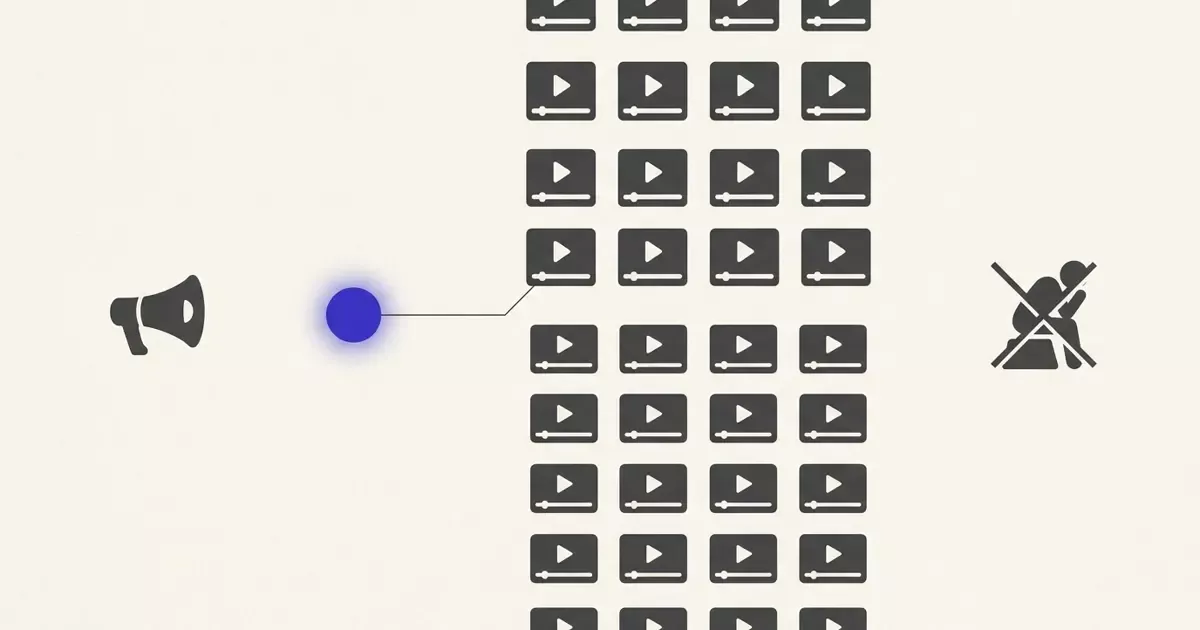
TL;DR: Every "algorithm secret" is two or three viral videos with a rule reverse-engineered onto them. You can't crack the algorithm, and it isn't on your side anyway. But you don't have to: the thing that earns attention is the same on every channel, and it doesn't depend on this month's settings. For a faceless creator, that durable thing is a style consistent enough that the catalog itself becomes the distribution.
A creator posted "10 things the new YouTube algorithm loves" the other week. Confident delivery, 23,000 views, screenshots of channels that blew up. Good video. Then I read the top comment, and it was sharper than the video.
"Complete nonsense," it opened. "Nobody knows how the algorithm works. Claiming you do makes you a liar. You found a few channels and started fantasizing about why they became successful, without really knowing."
He's right, and it's worth sitting with why. Then I want to connect it to a second piece I read the same week, because together they point at the only strategy that actually survives.
Most "algorithm secrets" are survivorship bias with a thumbnail
Almost every algorithm tip follows the same recipe: find two or three videos that went viral, stare at them, and back-fill a rule that explains the win. It feels like analysis. But you never see the thousand channels that did the exact same thing and got nothing, so the "rule" looks airtight when it's really just the survivors talking.
The proof is in the advice itself. For years the same guru-sphere insisted you should never delete a video — deleting creates a gap in views, the algorithm panics, your channel suffers. This year the advice flipped: delete your worst videos so they stop dragging your channel's average down. Same confidence, opposite instruction. The video in question even admits it - "this is the one we were really wrong about." When the rules reverse and the certainty doesn't, the certainty was never about the rules. (We pulled that specific claim apart in YouTube now scores your channel, not your videos.)
The commenter's best point goes deeper than "they're guessing." He notes the algorithm isn't even on your side. It optimizes for watch time and interaction, and the most interactive emotion is anger, so it leans toward rage-bait. What's good for YouTube, what's good for you as a creator, and what's good for the viewer are three different things, and pretending they overlap is the central lie of most growth content.
So far, so good. But then he overshoots: "None of these things will help. There are no rules by which you can thrive. There's no realistic strategy."
That's the opposite trap. No magic formula doesn't mean no craft. "Don't make a video that sounds like fifty others" isn't a hack, it's just not being lazy. "Read the comments under the top videos before you write" isn't a secret, it's research. These things help not because they game a system, but because they make something worth watching, whichever way the system happens to be tuned this quarter.
It's all the same game
Now the second piece. Elvis Sun, a growth and PR operator, wrote a post called "The Game of Attention." His argument: PR, cold email, X, Reddit, SEO aren't separate skills. They're one game. You're earning attention from people trained to ignore everything, and the psychology doesn't change when the channel does.
He got there watching MrBeast talk about studying retention - treating every frame like it had to earn the right to exist. The viewer who scrolls past your video, the prospect who deletes your cold email, the journalist who ignores your pitch: same person, same reflex, protecting their attention.
Once you see it, you can't unsee it. And it lines up with where the YouTube comment landed. You can't crack the algorithm. But you don't need to, because the thing that earns attention is the same across every channel, and it doesn't depend on this month's settings.
Elvis proves it with a move I keep thinking about. He posted a script on X, it went viral, then he screenshotted the tweet - engagement numbers and all - and dropped it on Reddit with no explanation. 512,000 views. More than the original. The social proof was baked into the image before anyone read a word. Validate cheap, amplify expensive. Then he took the same idea to a journalist covering the topic and turned it into a Mashable feature in three days. (The Game of Attention(opens in new tab), Elvis Sun.)
For a faceless channel, the product is the consistency
Elvis describes three levels. Single-channel mastery, where most people stop. Cross-channel amplification, where you replay a proven idea somewhere new. And the endgame: the product-driven flywheel, where the product generates attention on its own. Polymarket detects breaking news from trader behavior and posts it automatically. PhotoAI's outputs are inherently shareable, so every share is free marketing. As he puts it: product moat becomes distribution moat.
That third level is the whole point of running a faceless channel as a system instead of a content pile.
A channel with a style consistent enough that viewers recognize it before the title loads isn't doing cross-channel marketing. The catalog is the distribution. Every video sells the next one. The recognizable look, the voice, the pacing - that's the product, and a good product spreads itself.
Most people never get there. They chase the viral clip, not the recognizable channel, so they're stuck at level two forever: make something, then scramble to spread it, then start from zero on the next one. That's also why one-click AI video tools plateau - the same decay we walk through in the slop tax. They optimize the easy half - generating a clip fast - and skip the half that compounds. Generating is solved. Operating is the moat.
So what do you actually do
Stop chasing the secret. Build the things that survive every version of the algorithm: a style that stays consistent across a hundred videos, scripts that don't read as interchangeable, a publishing rhythm you can actually sustain. None of that depends on knowing what YouTube changed last month, and all of it earns attention on any channel you put it on.
The guru sells certainty. The skeptic sells despair. The real work is somewhere neither of them is looking, and it looks a lot like just operating a channel properly.
That's the bet behind ViralFaceless. Not "we cracked YouTube." Nobody did. We build the durable, un-sexy part: consistent style across every video, anti-slop scripts, a workflow you can run without burning out or turning your channel into a content farm. A channel built that way doesn't need an algorithm secret. It earns attention the only way anything does - by being worth stopping for.
Next time you publish anything, ask the question Elvis ends on: would you stop scrolling for this? If not, neither will they.
FAQ
If nobody knows the algorithm, isn't all advice useless?
No. There's a difference between gaming an unknown system and making something worth watching. "Don't sound like fifty other videos" or "read the comments first" help on any algorithm, because they improve the thing itself, not your guess about the ranking.
Doesn't "be consistent" contradict "don't be generic"?
Consistency is about your channel's identity - look, voice, pacing - staying recognizable across uploads. Generic is about your content being interchangeable with everyone else's. You want a style viewers recognize and content they can't get elsewhere. Those pull in the same direction.
What's the single thing to change first?
Make your channel recognizable before the title loads. Pick a visual and tonal signature and hold it across every upload, so the catalog starts selling the next video for you instead of each one starting from zero.
Writing the script is rarely what stops people.
Doing it again next week is. ViralFaceless turns a script into a finished episode in one pass, starting from the channel's saved image style, voice and caption mode.
About the Author

Founder at Dimantika
Co-founder of Dimantika. Builds Clipwright and ViralFaceless with coding agents. Previously ran GlockSoft with a partner for about 15 years. Writes about products and finding customers.
View all postsMore articles you might like.
Your 15-Second Short Isn't the Problem. Stop Cutting.
A dataset of 756,851 AI-generated videos says the 15-second clip is a rounding error. Here is what that number does and does not prove about your channel.

AI Video Summaries: Will Your Faceless Channel Survive Them?
Viewers can ask AI to summarize a video instead of watching it. Creators are split on whether that's an apocalypse or a padding tax. For faceless channels, it's a design constraint.

YouTube Video A/B Testing: Hooks Are Cheap. Winners Aren't.
YouTube video A/B testing reaches select creators in 2027. Three hooks are easy to make for a faceless channel. A verdict you can trust is the hard part.